Information
Landmark: Workers’ SquareCity: Maputo
Country: Mozambique
Continent: Africa
Workers’ Square, Maputo, Mozambique, Africa
Workers’ Square, known locally as Praça dos Trabalhadores, is one of Maputo’s most layered public spaces, where architecture, labor history, and everyday urban movement intersect. It is less ceremonial than some of the city’s grand squares, yet arguably more alive, shaped by constant motion and long-standing social meaning.
Historical Background
The square developed during the late colonial period as part of Maputo’s expanding civic and transport district. Its identity became more clearly defined after independence, when public spaces were reinterpreted to reflect labor, productivity, and collective contribution to the nation. The name itself anchors the square firmly in the idea of work and movement, rather than political display or leisure. Over time, it evolved naturally into a gathering and transit point tied closely to the surrounding railway infrastructure.
Architectural and Urban Setting
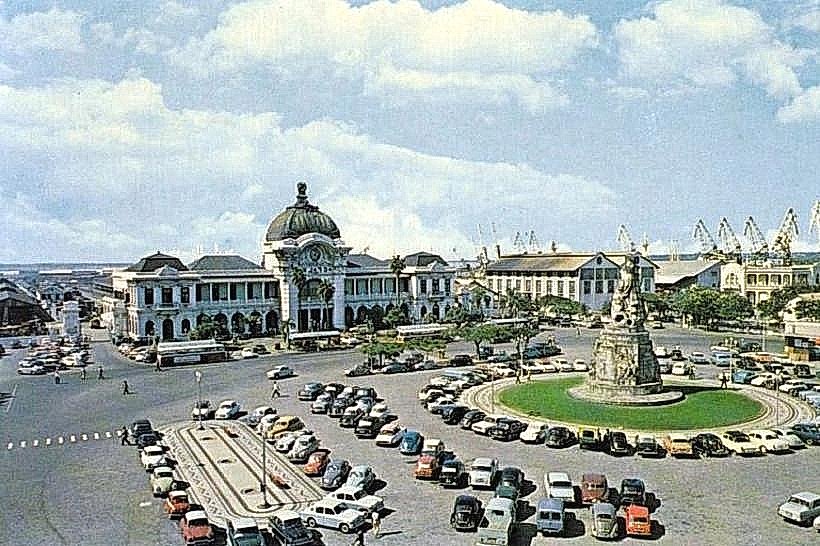
Workers’ Square is most strongly defined by the presence of Maputo Central Railway Station, whose grand dome and symmetrical façade dominate the square visually. The contrast is striking: the monumental elegance of the station rising above a square shaped by practical use and constant flow. Around the square, broad streets, railway facilities, and institutional buildings reinforce its role as a connector rather than a destination in isolation.
The open layout allows clear sightlines toward the station, giving the space a strong sense of orientation. There is little ornamental landscaping, and this restraint emphasizes movement, scale, and function.
Atmosphere and Daily Rhythm
The square feels busiest in the early morning and late afternoon, when commuters move toward trains, buses, and nearby offices. Footsteps, distant announcements, and traffic noise blend into a steady urban soundtrack. Vendors sometimes position themselves along the edges, adding color and informal commerce to the space.
Despite its size, the square does not feel overwhelming. Its openness allows people to pass through at their own pace, whether rushing to catch transport or lingering briefly in conversation. The rhythm of the square is defined by routine rather than events.
Social and Cultural Meaning
Workers’ Square carries a subtle but powerful symbolism. It reflects Maputo’s identity as a working city shaped by trade, transport, and everyday labor rather than purely administrative or ceremonial functions. The proximity to the railway station reinforces this meaning, recalling decades when trains carried workers across borders and connected the city to the wider region.
Rather than monuments, the square’s meaning comes from use. It is a place shaped by repetition, by thousands of daily crossings that quietly reinforce its purpose.
Visitor Experience
For visitors, Workers’ Square is best experienced by observation rather than exploration. Standing still for a moment reveals the layered interactions between architecture, movement, and sound. The station dome above, the open ground below, and the steady flow of people create a scene that feels authentic and unfiltered.
It may not be Maputo’s most picturesque square, but it is one of its most honest, offering a clear glimpse into how the city moves, works, and connects its past to its present through everyday life.