Information
Landmark: San Agustin ChurchCity: Manila
Country: Philippines
Continent: Asia
San Agustin Church, Manila, Philippines, Asia
San Agustin Church
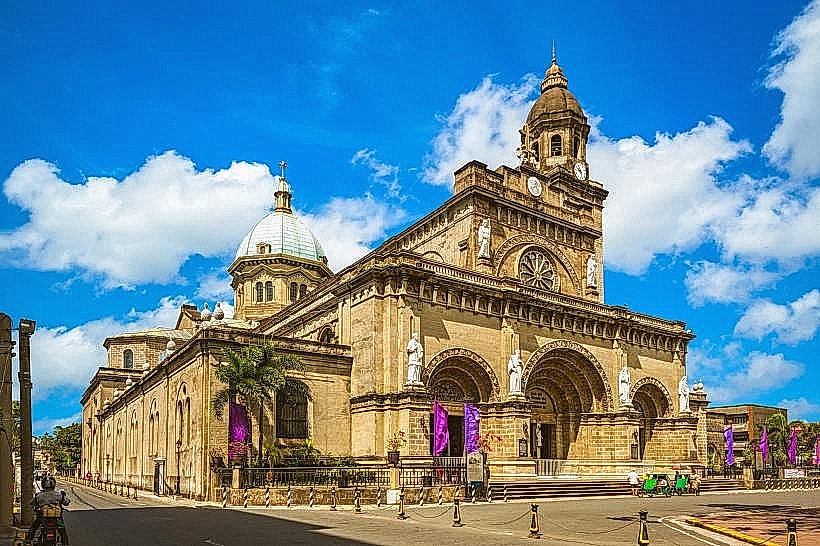
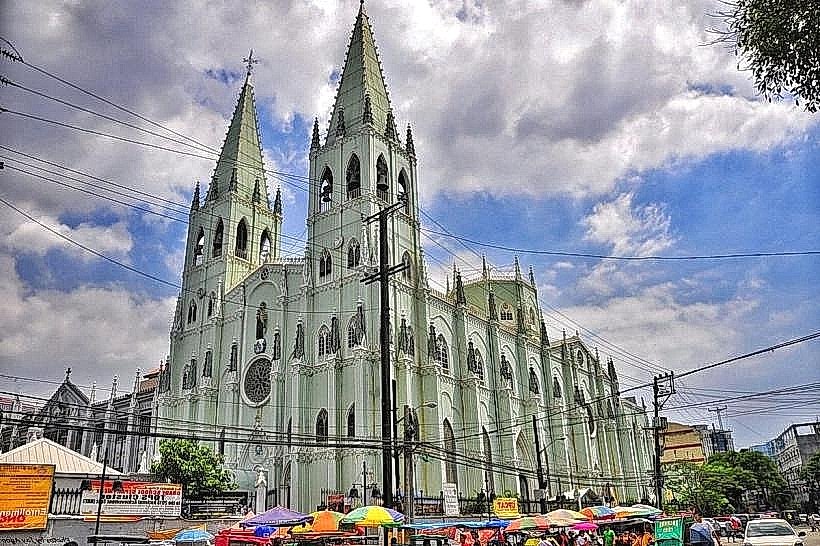
San Agustin Church is a Roman Catholic church under the auspices of the Order of St. Augustine, located inside the historic walled city of Intramuros in Manila. It is the oldest stone church in the Philippines and a designated UNESCO World Heritage Site under the "Baroque Churches of the Philippines" classification.
Visual Characteristics
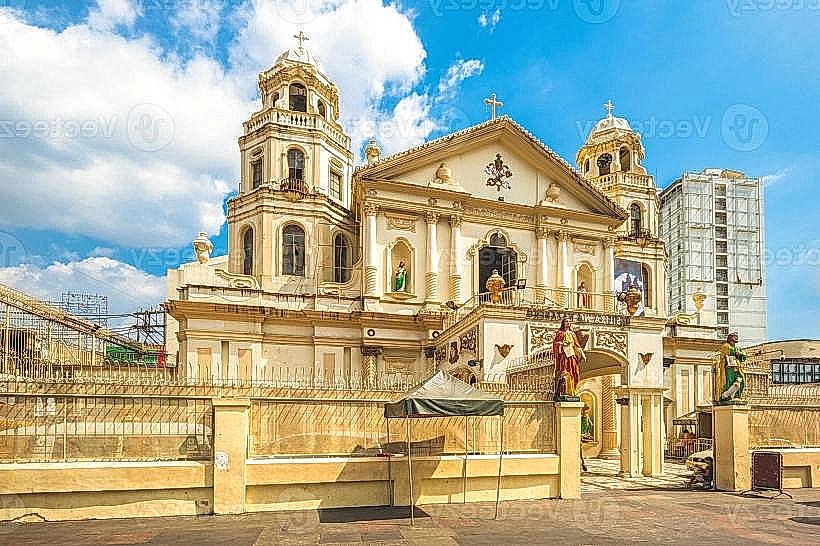
The church is a prime example of Spanish Baroque architecture, specifically the "Earthquake Baroque" style, characterized by massive buttresses and thick walls designed to withstand seismic activity. The facade is austere, featuring Doric and Corinthian columns and a pediment topped by a cross. The interior is noted for its high-fidelity trompe l'oeil ceilings and walls, painted in 1875 to create a three-dimensional carved effect. It houses a magnificent 16th-century pipe organ and ornate chandeliers imported from Paris.
Location & Access Logistics
Address: General Luna St, Intramuros, Manila, 1002 Metro Manila.
Access: Situated at the intersection of General Luna and Real Streets.
Transport: Accessible via LRT-1 (Central Terminal Station). It is a central point within Intramuros, easily reached on foot from the Manila Cathedral or Casa Manila.
Entry: Admission to the church for prayer is free, but the San Agustin Museum, located in the adjacent monastery, requires a ticket.
Historical & Ecological Origin
The current structure, completed in 1607, is the third version of the church; the first two were made of bamboo and wood and destroyed by fire. It is the only building in Intramuros that remained standing after the total destruction of the city during the Battle of Manila in 1945. Historically, it served as a religious, social, and cultural epicenter for the Spanish elite. The monastery once housed extensive botanical gardens where Augustinian friars studied local medicinal plants.
Key Highlights & Activities
San Agustin Museum: A sprawling complex within the former monastery displaying religious art, colonial-era furniture, and ecclesiastical vestments.
The Tomb of Miguel López de Legazpi: The founder of Manila is interred in a side chapel near the high altar.
Paoay-style Buttresses: Observation of the massive exterior support structures that have allowed the building to survive major earthquakes since the 17th century.
Choir Loft: Features 68 hand-carved molave wood seats with fine bone inlays dating back to the 17th century.
Infrastructure & Amenities
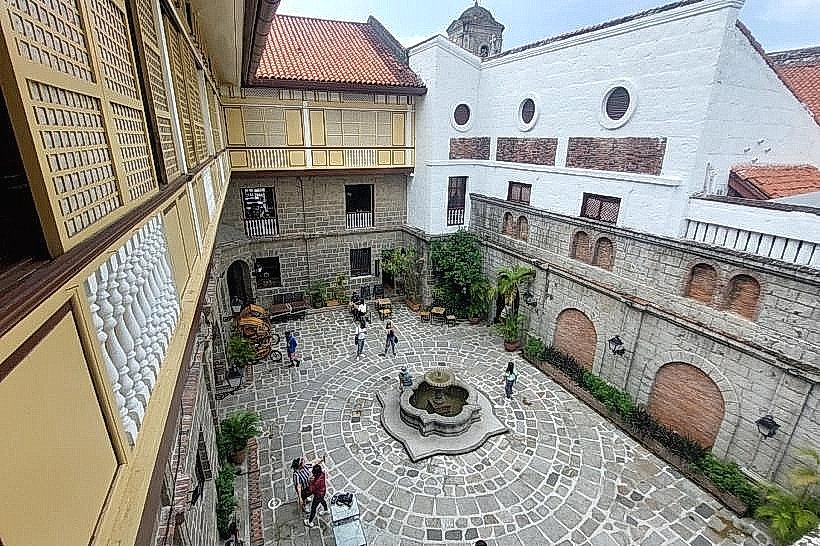
The complex includes the church, the museum, and an internal courtyard (cloister). Restrooms are available for museum visitors. The area is highly developed for tourism, with numerous cafes and heritage hotels in the immediate vicinity. 5G cellular coverage is excellent. As an active church and a popular wedding venue, access to the main nave may be restricted during ceremonies.
Best Time to Visit
The museum is open daily from 08:00 to 12:00 and 13:00 to 18:00. Visit during weekday mornings to avoid the heat and the weekend wedding rush. Modest attire is required for entry into the sanctuary.
Facts & Legends
The church is often called "The Wedding Capital of the Philippines" due to its high demand for ceremonies. A local legend claims that the church's foundation is shaped like a boat, allowing it to "float" during earthquakes, which contributed to its survival when all surrounding structures collapsed.
Nearby Landmarks
Casa Manila: 0.1 km West (directly across the street)
Manila Cathedral: 0.5 km North
Plaza San Luis Complex: 0.1 km West
Baluarte de San Diego: 0.6 km South