Information
Landmark: University of Santo TomasCity: Manila
Country: Philippines
Continent: Asia
University of Santo Tomas, Manila, Philippines, Asia
The University of Santo Tomas (UST) is the oldest existing university in Asia, founded on April 28, 1611. It is a private, Catholic research university located in Sampaloc, Manila.
Visual Characteristics
The 21.5-hectare campus is characterized by a blend of Renaissance Revival and Modernist architecture. The Main Building, the university's centerpiece, is a massive earthquake-proof structure featuring a symmetrical facade and a clock tower. The campus is known for its wide open spaces, including the Benavides Garden and the Plaza Mayor, which are illuminated at night. It is enclosed by high stone walls and prominent gateways.
Location & Access Logistics
Address: España Blvd, Sampaloc, Manila, 1008 Metro Manila.
Access: The campus is bounded by España Boulevard, Forbes Street (A.H. Lacson Ave), P. Noval Street, and Dapitan Street.
Transport: * LRT-2: Get off at Legarda Station (15-minute walk).
PNR: Get off at España Station.
Jeepneys/Buses: Numerous routes from Quezon City and Manila pass through España Boulevard.
Entry: Visitors must surrender a valid ID at the gates. Tourists are generally allowed in public areas but restricted from entering academic buildings without prior authorization.
Historical & Ecological Origin
Founded by Miguel de Benavides, the third Archbishop of Manila, UST was originally located in Intramuros before moving to the Sampaloc campus in 1927 due to space constraints. During WWII, the campus was used by Japanese forces as an internment camp for nearly 4,000 Allied civilians. It was declared a "National Historical Landmark" in 2011. Ecologically, the campus serves as a significant urban green space, housing various century-old trees and manicured lawns.
Key Highlights & Activities
UST Museum: The oldest museum in the Philippines, housing extensive collections of natural history, ethnography, and fine arts.
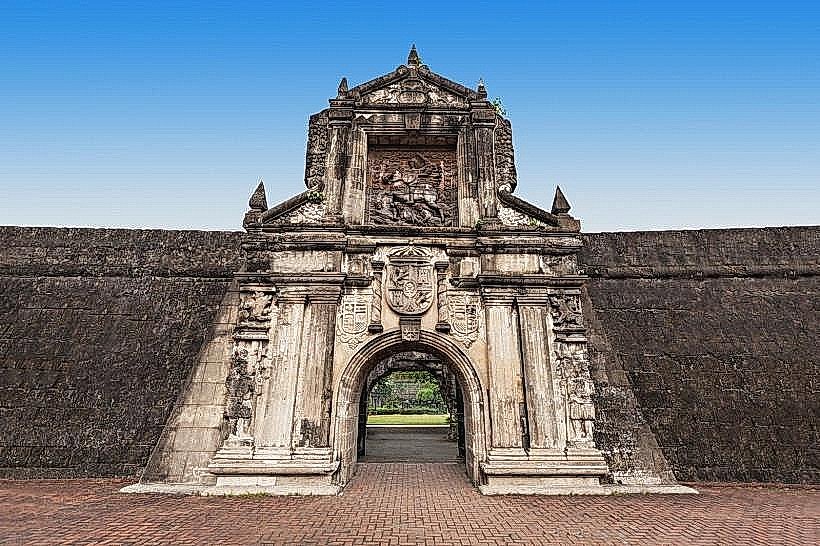
Arch of the Centuries: A stone arch that originally stood in the Intramuros campus; it serves as a symbolic portal for students entering and leaving the university.
UST Main Building: The first earthquake-resistant building in the Philippines, featuring 40 separate structural units.
The Santisimo Rosario Parish: The university's church, which serves both the academic community and the local district.
The Quadricentennial Square: A modern plaza featuring an interactive fountain and the "Tetraglobal" sculpture.
Infrastructure & Amenities
The campus functions as a "city within a city." It includes the UST Hospital, a stadium, several multi-story car parks, and the Tan Yan Kee Student Center. Numerous cafes and fast-food outlets are located along the perimeter streets (P. Noval and Dapitan). 5G cellular coverage is excellent throughout the campus.
Best Time to Visit
The campus is most scenic during the Christmas season (December) when it is decorated with massive light installations and hosts the "Paskuhan" festivities. For casual visits, late afternoons provide the best lighting for the architecture. It is closed to the general public during major examinations (USTET) and high-security events.
Facts & Legends
The Arch of the Centuries is the subject of a popular campus legend: it is said that students who pass through the arch outward before their graduation will not finish their degree on time. Consequently, students only walk through it toward the campus during their freshman "Tiger Walk" and toward the exit after their commencement.
Nearby Landmarks
Far Eastern University: 0.8 km Southwest
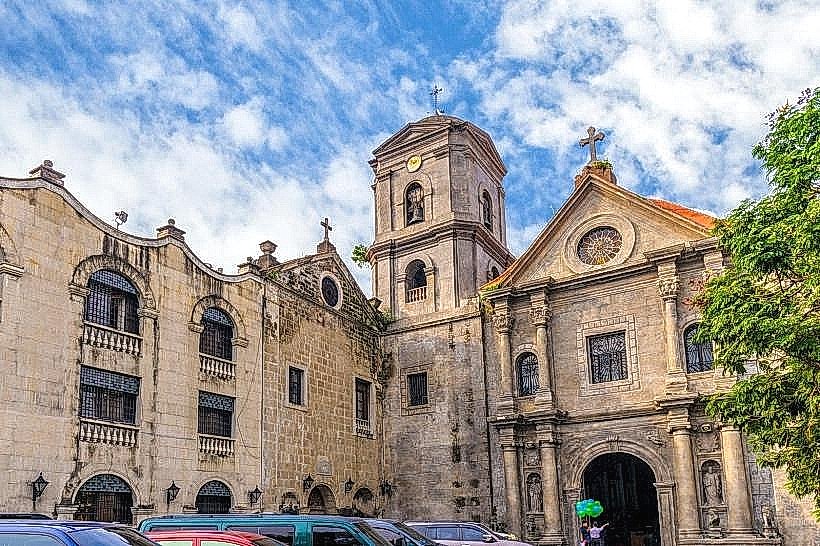
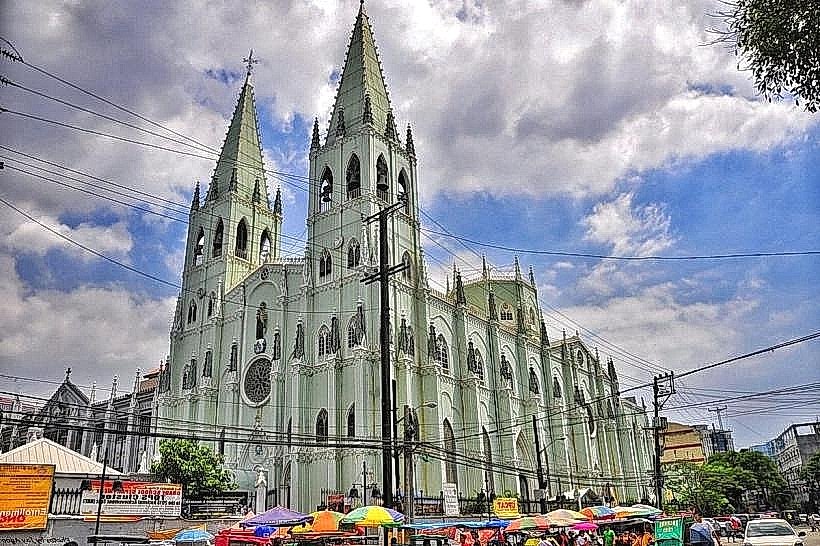
San Sebastian Church: 1.2 km South
SM City San Lazaro: 1.5 km North
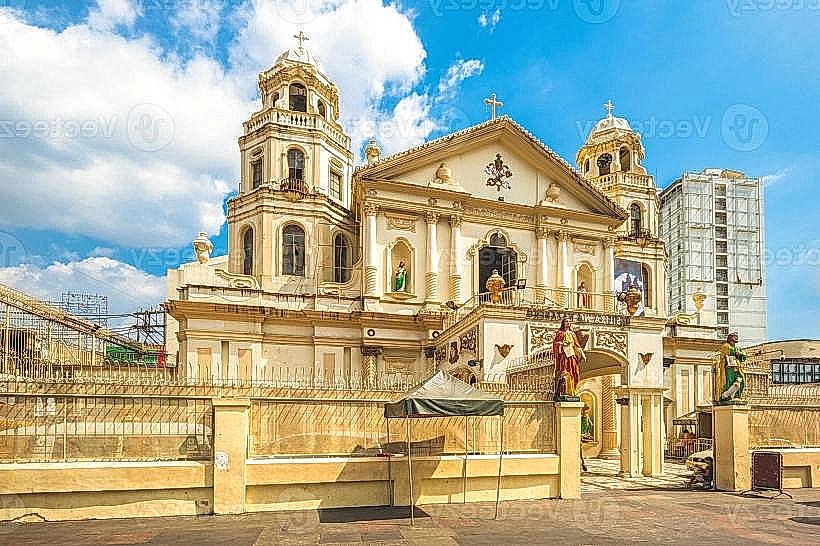
Quiapo Church: 1.8 km South